


Geological and Exploration Services
Exploration and geological services of KCE are as follows:
A mine is a location where there is a substantial concentration of various metals and rocks with significant economic value. In a more precise definition, the concentration and distribution of a mineral within a rock exceeding normal levels is referred to as a mine. Mines typically occur in the form of lode, vein, seam, rock, or placer deposits within rock formations. The level of extraction of these raw material reserves is determined by economic factors, investment levels, labor allocation, and the energy required for the extraction, processing, and transportation of materials extracted from mines, each presenting distinct and individual challenges.
Mining:
Mining is a historically significant industrial activity that plays a crucial role in supporting various industries and economies worldwide. In some countries, the economy is heavily dependent on the mining sector, which serves as a major contributor to export revenues and job creation. For example, in Australia, mining accounts for about 25% of the country’s exports, while in Canada it contributes to about 40% of export revenues. Similarly, in Iran, mining plays a vital role in the economy, contributing around 10% of export revenues. Iran is rich in mineral resources such as oil, gas, coal, iron, copper, gold, and silver, which have the potential to drive economic development and improve social welfare. However, mining activities can have adverse environmental impacts, including air pollution, soil and water contamination, and destruction of natural ecosystems. It is essential to implement sustainable mining practices and establish strict environmental laws and regulations to mitigate these negative effects. Mining involves a complex process that includes exploration, exploitation, and processing to extract valuable minerals from the earth for various industrial applications. Mine exploration is a crucial initial step in identifying potential mining sites and assessing the presence and quantity of valuable minerals. This process helps determine the feasibility of mining operations and plan efficient extraction practices
Types of Mining
Surface Mining
Surface mining is a variety of techniques to extract minerals near the surface of the earth. This method is especially effective when the ores are located in shallow deposits.
Open-pit Mining
Open-pit mining is a commonly utilized method of surface mining that is characterized by its simplicity and efficiency. This technique involves the excavation of a large open pit or “borrowing” from the earth’s surface to expose desired mineral deposits. It is a cost-effective approach particularly when minerals are located near the surface, facilitating easy extraction. The process typically begins with the removal of overburden – the layer of soil, rock, and other materials covering the mineral deposits. Heavy machinery such as excavators and transportation trucks are then employed to extract, load, and haulage. Open-pit mining is suitable for a variety of minerals including coal, copper, gold, and iron ore.
Mechanical Mining
Mechanical mining is the extraction of minerals from sediments of rivers and streams. This method relies on the natural movement of water to separate heavier minerals such as gold and platinum from lighter sediments such as sand and gravel. Mining workers use various techniques including panning, cutting, and dredging to extract and recover these valuable minerals. Mechanical mining has a rich history dating back to the gold rush in the 19th century. It may not be used today due to the depletion of accessible reserves, but it remains an important method of recovering precious metals in certain geographical locations.
Underground Mining
Underground mining takes place when minerals are located at a significant depth below the surface of the earth. This method of accessing mineral deposits through shafts and tunnels provides a more controlled environment for mining.
The most important part of consulting companies in mineral exploration is relying on geology and exploration science. Geology is a scientific vision of the condition of the earth’s crust and mantle which are identified by recognizing rocks, and faults, understanding magmatism, volcanic eruptions, and conditions of their formation and alteration, the way mineral deposits are formed. The base of exploratory works depends on the science of geology and exploration, and the fundamentals of these sciences play a significant role in recognizing and identifying areas of mineralization. KCE has always succeeded in identifying and exploring various mineral resources including iron, copper, gold, lead, zinc, barium, manganese, titanium, phosphate, molybdenum, antimony, and other deposits by its reliable experts in the field of petrology, economic geology, tectonics, and mine exploration, which these deposits are all over Iran, and are very precious in the 40-year history of this old consultant.
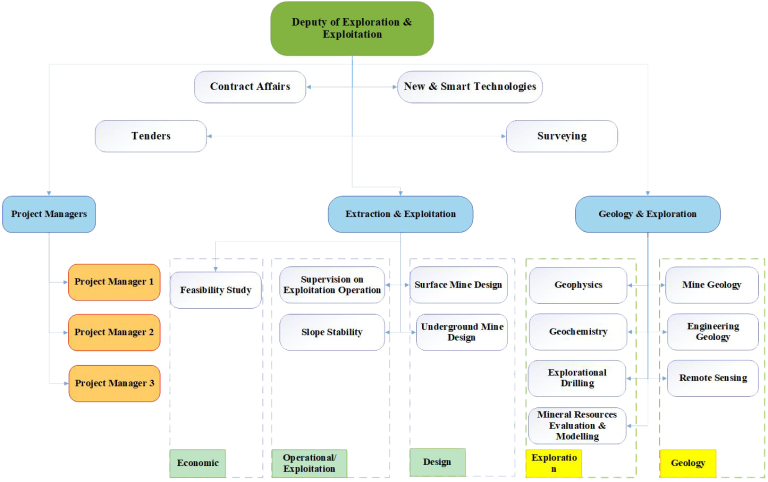

Kavoshgaran Consulting Engineers Company (KCE) is one of the oldest consulting firms in Iran specializing in geology, mining, and mineral industries. Established in 1984 in Tehran, KCE has a solid reputation in the industry